Beef Tataki
⏲ ~57 min total · prep 19 · cook 15 · 4 servings
Lunch⏱ 50 min total🔥 6.3g net carbs
By the KFI Test Kitchen · Tested & approved by Jason Lieu, KFI recipe editor
Published Sep 15, 2026 · Updated Sep 15, 2026
Ingredients
- 1 lb beef tenderloin, trimmed into a tight 3-inch-wide log
- 1 1/2 tbsp avocado oil, divided
- 3 tbsp soy sauce or tamari
- 2 tbsp fresh lemon juice
- 1 tsp allulose
- 2-inch piece daikon radish, peeled
- 1 scallion, sliced into fine rings
- 2 tsp toasted sesame seeds
- 3 garlic cloves, sliced paper-thin
Instructions
- Season the tenderloin log on all sides with 1 tsp kosher salt and plenty of black pepper.
- Heat 1 tbsp of the oil in a cast-iron skillet over high heat until it just smokes; sear the log 45-60 seconds per side, turning 4 times, about 4 minutes total — only the outer 1/4 inch should gray while the center stays raw.
- Plunge the seared log straight into a bowl of ice water for 5 minutes to stop the carryover cooking, then pat completely dry.
- Wrap tightly in plastic and freeze 20-25 minutes, until the surface is firm to the thumb but the log still flexes.
- Meanwhile whisk the soy sauce, lemon juice, and allulose until dissolved; grate the daikon on the fine holes and squeeze it lightly; fry the garlic slices in the remaining 1/2 tbsp oil over medium-low, stirring, until pale gold, about 2 minutes, then drain on a paper towel.
- Unwrap and slice the beef 1/8 inch thick with long single strokes of a sharp knife.
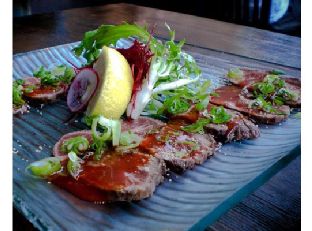
- Fan the slices over chilled plates, set a small mound of the daikon in the middle, pour the sauce around the edge, and finish with the scallion, sesame seeds, and garlic chips.
Why this recipe works
- The freeze makes the slices Twenty to twenty-five minutes in the freezer firms the surface so the knife cuts 1/8-inch sheets without dragging. A room-temperature log smears.
- The ice bath stops the gray Plunging the seared log into ice water halts carryover cooking on the spot. The sear stays a thin quarter-inch band and the center stays red.
- Sauce built on acid Lemon juice and soy carry the dish, with a teaspoon of allulose rounding out the salt. The whole plate runs 6.3 net carbs with no sugar in the sauce.
Tips for making this recipe well
Sear by the clock
Forty-five to sixty seconds a side on a screaming-hot skillet is the whole window. Past a minute the gray band creeps inward and the dish reads as plain roast beef.
Squeeze the daikon
Grated daikon holds a surprising amount of water, and a light squeeze keeps the mound from diluting the sauce on the plate. Squeeze lightly, since a hard press turns it dry and stringy.
Low heat for the garlic chips
Garlic goes from pale gold to bitter fast over high heat. Medium-low with constant stirring buys you a wide margin, and the chips crisp further as they drain on the paper towel.
One stroke per slice
Use the full length of a sharp knife in a single pull rather than sawing. Short strokes tear the seared edge and rough up the surface of each slice.
Chill the plates
Tataki is served cool on purpose. Plates from the freezer keep the beef from warming up and going soft while you eat.
Serving suggestions
Fan the slices across chilled plates in overlapping rows, then set a small mound of the squeezed daikon in the middle of each. Pour the soy-lemon sauce around the edge rather than over the beef so the sear stays visible, and finish with scallion rings and sesame seeds, the garlic chips going over last so they stay crisp. At 6.3 net carbs a serving it fits a keto lunch without math, and chopsticks make the thin slices easier to manage than a fork does.
Storage and meal prep
This is a same-day dish. The sliced beef loses its texture overnight, so keep any extra in an airtight container and plan to finish it the next day at the latest. The sauce is a different story: it refrigerates well for three to four days in a jar and doubles easily. Grated daikon weeps as it sits, so grate it fresh each time. The garlic chips keep their snap longest in a small covered container at room temperature, away from the sauce.
Variations worth trying
- Tamari version Swap the soy sauce for tamari at a one-to-one ratio and the dish stays gluten-free. Nothing else in the method changes.
- A different cut A trimmed sirloin tip works when tenderloin is priced out. Slice it slightly thicker, since it is leaner and shows more grain.
- Two-citrus sauce Half lemon juice and half lime juice pushes the sauce brighter. Keep the allulose at a teaspoon so it does not turn sharp.
- Chili oil finish A small spoonful of chili oil drizzled over the daikon adds warmth without touching the method. Start with less than you think you need.
Frequently asked questions
Is the raw center safe to eat?
Tataki is eaten rare on purpose; only the outer quarter inch is cooked. That is the traditional form for whole-muscle beef, and anyone who avoids raw beef should pick a different recipe.
Why freeze the beef at all?
A partially firmed log slices thin and clean. The window is short on purpose, twenty to twenty-five minutes, so the middle stays soft and only the surface sets.
Can I skip the allulose?
Yes, though the sauce tastes rounder with it. Any granulated keto sweetener dissolves the same way; leave it out entirely and the lemon reads sharper.
What if I do not own cast iron?
Any heavy skillet preheated until a drop of water skitters across it will do. Thin pans lose heat through four turns, so give each side a few extra seconds.
How thin is 1/8 inch in practice?
About three slices to the width of a pencil. If the slices come out thick, the log needs five more minutes in the freezer rather than more pressure on the knife.
Related keto recipes
As an Amazon Associate and affiliate partner, Keto Food Ideas earns from qualifying purchases at no additional cost to you. Nutritional values are estimates. Recipes are developed with AI assistance and reviewed by our editors before publishing.
← More Lunch recipes · Home