Coffee Rubbed Prime Rib Roast
⏲ ~13 min total · prep 4 · cook 9 · 1 servings
Lunch⏱ 240 min total🔥 4.2g net carbs
By the KFI Test Kitchen · Tested & approved by Jason Lieu, KFI recipe editor
Published Sep 15, 2026 · Updated Sep 15, 2026

Ingredients
- One 4-lb standing rib roast (3 ribs), fat cap intact
- 2 tbsp finely ground dark-roast coffee
- 1 tbsp kosher salt
- 2 tsp coarsely ground black pepper
- 1 tsp garlic powder
- 1 tsp onion powder
- 1 tsp smoked paprika
- 1 tbsp neutral oil
- 1 cup beef broth
- 2 sprigs rosemary
- 1 tbsp cold butter
Instructions
- Score the fat cap in a 1-inch crosshatch, cutting through the fat but not into the meat, and set the roast fat-side up on a rack in a roasting pan.
- Stir the coffee, salt, pepper, garlic powder, onion powder, and paprika together; rub the roast all over with the oil, then press the rub onto every surface, packing it into the score marks.
- Let the roast sit uncovered on the counter for 1 hour to lose the refrigerator chill.
- Roast at 250°F for 2 to 2 1/4 hours, until an instant-read probe in the center of the eye reads 118°F — the surface should look dark and crusted but not burnt.
- Tent loosely with foil and rest 20 minutes; the internal temperature climbs to about 128°F as it sits.
- Heat the oven to 500°F and return the uncovered roast for 8-10 minutes, until the crust turns nearly black at the edges and the center reads 126-128°F.
- Rest again, uncovered, for 15 minutes while you make the jus: set the roasting pan across two burners, add the broth and rosemary, scrape the fond over medium heat, and reduce by half, then swirl in the cold butter off the heat.
- Carve between the bones into 1-inch-thick slices and spoon the jus around them.
Why this recipe works
- Reverse sear Two hours at 250°F brings the center to 118°F evenly, then a short 500°F blast builds the crust. No gray band of overcooked meat under the surface.
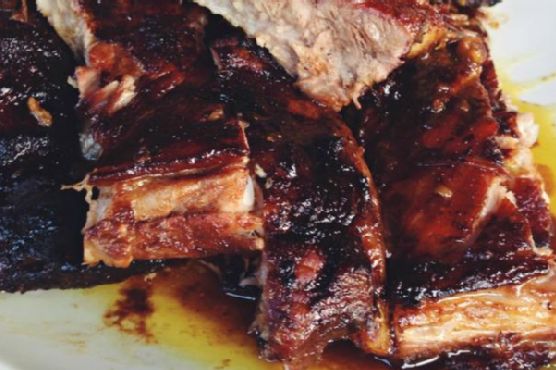
- Coffee reads as crust Finely ground dark roast tastes nothing like coffee once roasted; it reads as deep, toasted bark. The score marks in the fat cap give it something to grip.
- Two rests, both needed A 20-minute tented rest after the low roast lets the temperature climb to about 128°F, and a 15-minute rest after the sear keeps the juices on the plate instead of the board.
Tips for making this recipe well
Uncovered hour on the counter
The raw roast sits out for an hour to lose the fridge chill, which is what lets the center cook evenly at 250°F. A cold center lags the probe by a wide margin.
Probe the eye of the meat
Set the thermometer in the center of the eye, away from bone and fat pockets. Bone-side readings run misleading and pull the roast too early.
Score fat, not meat
Cut the crosshatch through the fat cap and stop at the meat line. Cuts into the meat leak juices during the long roast.
Jus off the heat with butter
Reduce the broth and rosemary by half, scraping the fond, then swirl in the cold butter off the burner. Butter added over heat can split and go greasy.
Carve between the bones
Cut down between the rib bones into 1-inch slices. The bones either lift away whole or stay on as handles.
Serving suggestions
Carve between the bones into 1-inch-thick slices and spoon the jus around the meat rather than over it, so the coffee crust stays crisp where it counts. The 4-pound roast feeds a table with leftovers for cold-lunch plates. Each serving runs 4.2 g net carbs, since the rub and jus carry almost nothing. Horseradish cream suits the smoked paprika in the crust if the table likes heat.
Storage and meal prep
Refrigerate leftover slices in a covered container for 3 to 4 days. Cold prime rib might be the best version of it; slice thin and eat it straight, or warm slices gently in the jus over low heat. The microwave grays the edges, so resist it. Wrapped tightly, the roast freezes for 2 to 3 months; thaw overnight in the fridge and rewarm in the pan juices.
Variations worth trying
- Rub the night before Apply the rub and refrigerate the roast uncovered overnight for a drier surface and deeper seasoning. Pat it dry before it goes in the oven.
- Thyme in the jus Swap the rosemary sprigs for thyme if that is what the drawer has. Both stand up to the coffee rub.
- More heat in the bark Add a teaspoon of cayenne to the rub for a warmer crust. The fat cap carries the spice without letting it take over.
- Smaller roast The method holds for a lighter cut than the 3 ribs written here. Start checking the probe temperature 30 minutes early since the low roast moves faster at smaller weights.
Frequently asked questions
Will it taste like coffee?
No. Roasted, the dark grounds read as a toasted, savory bark, closer to a charred crust than a morning cup. Nobody at the table will name the ingredient.
How done is 118°F?
The center sits rare as it comes off the low roast, then climbs to about 128°F during the 20-minute rest, which is a rosy medium-rare. For more done, keep roasting at 250°F and check every 15 minutes.
Can I skip the 500°F finish?
You can, but you lose the dark crust that makes the roast. Without the blast the surface stays pale and steamed-looking even after 2 hours.
Do I need a rack?
A rack keeps the roast out of its own drippings so air moves underneath and the bottom crusts. Set directly on the pan, the underside steams gray.
How many net carbs?
Each serving comes to 4.2 g net carbs, effectively all from the onion and garlic powders in the rub. The roast itself and the jus add almost nothing.
Related keto recipes
As an Amazon Associate and affiliate partner, Keto Food Ideas earns from qualifying purchases at no additional cost to you. Nutritional values are estimates. Recipes are developed with AI assistance and reviewed by our editors before publishing.
← More Lunch recipes · Home