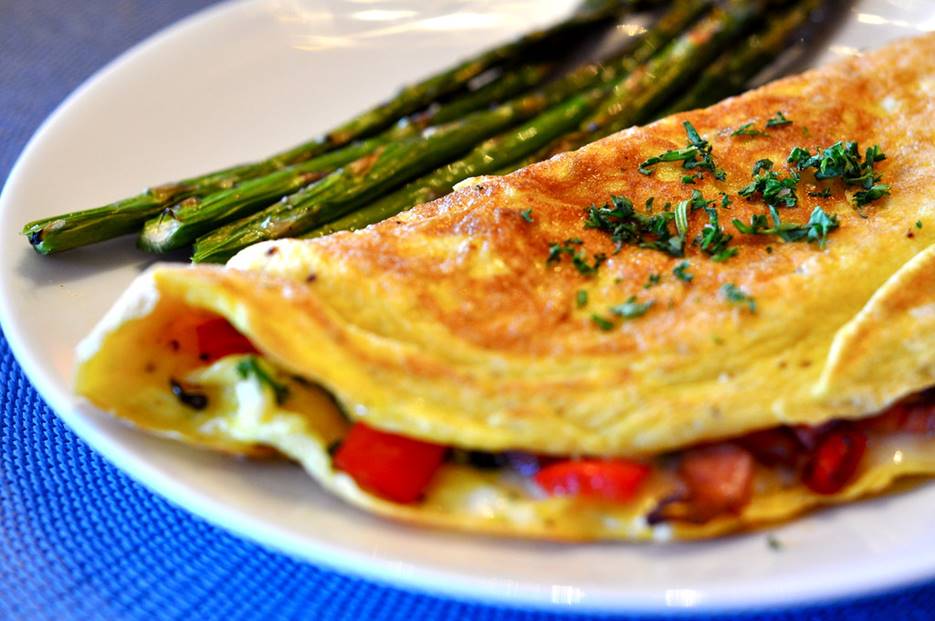
Denver Omelete
⏲ ~13 min total · prep 11 · cook 2 · 4 servings
Breakfast⏱ 10 min total🔥 6.0g net carbs⚡ ≈450 kcal/serving~4% of calories from carbs
By the KFI Test Kitchen · Tested & approved by Jason Lieu, KFI recipe editor
Published Sep 15, 2026 · Updated Sep 15, 2026

Ingredients
- 3 large eggs
- 1 tbsp water
- 1/4 tsp kosher salt
- 1 tbsp unsalted butter
- 2 oz cooked ham, cut into 1/2-inch dice
- 2 tbsp finely diced yellow onion
- 2 tbsp finely diced green bell pepper
- 1/3 cup shredded sharp cheddar
Instructions
- Beat the eggs with the water and salt just until uniform, about 20 seconds — diner omelets stay tender-dense, so don't whip them to foam.
- Melt the butter in an 8-inch nonstick skillet over medium heat; sauté the ham, onion, and bell pepper 2-3 minutes, until the onion edges brown and the pepper loses its raw crunch, then scrape the filling into a small bowl.
- Raise the heat to medium-high and pour in the eggs; shake the pan flat, and as soon as the edges set (about 10 seconds), lift them with a spatula and tilt the pan so raw egg runs underneath. Repeat around the rim for 45-60 seconds, until the top is wet-glossy but no longer liquid.
- Scatter the ham mixture and cheddar in a band straight across the center of the omelet.
- Fold one third over the filling, then roll the omelet the rest of the way and tip it seam-side down onto a warm plate.
- Let it sit 30 seconds so the residual heat melts the cheddar, then serve.
Why this recipe works
- Fillings cooked first Two to three minutes in butter browns the onion edges and takes the raw crunch out of the pepper while warming the diced ham. Raw fillings leak water into the eggs as they cook.
- Diner eggs Twenty seconds of beating, no foam. The tender-dense texture of a diner omelet comes from eggs poured wet and cooked fast.
- The tilt and tuck Lifting the set edges and tilting the pan lets raw egg run underneath, 45 to 60 seconds in total. Thin layers cook through before they toughen.
Tips for making this recipe well
Medium-high for the pour
The heat goes up a notch when the eggs hit the pan. Edges set in about 10 seconds at that temperature, which is the pace this omelet runs at.
Wet-glossy, not liquid
Fold when the top is wet-glossy but no longer runs. Fold earlier and uncooked egg escapes onto the plate.
A straight band of filling
Lay the ham mixture and cheddar across the center in a line, nothing near the edges. A centered band folds clean.
Rest 30 seconds
The residual heat melts the cheddar after the fold. Cutting sooner drags the filling out of place.
One omelet, one pan
An 8-inch nonstick, a tablespoon of butter, and 10 minutes of attention. Doubling means two pans, not a bigger one.
Serving suggestions
It lands seam-side down on a warm plate and sits 30 seconds while the cheddar melts against the filling. At 6 g net carbs this is a complete breakfast with nothing required on the side. Diner style means no garnish; the fold holds the ham, onion, and pepper in a clean line when you cut into it. A cup of the vanilla butter latte next to it covers the whole morning.
Storage and meal prep
Omelets are a 10-minute dish, and the math only works fresh. Leftovers keep 3 to 4 days in a covered container in the refrigerator, but the egg tightens and the fold weeps as it chills; reheat gently in a covered nonstick pan over low heat and accept a denser breakfast. The freezer gets a hard no here too. Cook the eggs you need; three more take two minutes tomorrow.
Variations worth trying
- Mushroom version Swap the bell pepper for 1/3 cup diced mushrooms, cooked with the ham until they release and reabsorb their liquid. Dry fillings only, same as ever.
- Pepper jack inside Replace the sharp cheddar with pepper jack. It melts the same way and adds heat without another step.
- Two-egg version Use 2 eggs and 2 tsp water in the same 8-inch pan. The layer runs thinner, so cut the tilt-and-tuck stage to about 30 seconds.
Frequently asked questions
Why cook the ham mixture first?
Two to three minutes in butter browns the onion edges and removes the raw crunch from the pepper. Raw fillings steam and leak water into the eggs.
Why not whip the eggs foamy?
Diner omelets are tender-dense, which comes from 20 seconds of beating. Foam gives you a souffle texture that collapses on the plate.
My eggs browned too fast.
The pan ran hotter than medium-high or sat empty too long. The butter should melt and foam without browning before the eggs go in.
Can I add mushrooms or other fillings?
Cook anything wet first for the same 2 to 3 minutes. The fold is built for about a third of a cup of filling; more than that spills.
How do I keep it from sticking?
An 8-inch nonstick and a full tablespoon of butter. Slide the spatula under the set edges early and often during that first minute.
Related keto recipes
As an Amazon Associate and affiliate partner, Keto Food Ideas earns from qualifying purchases at no additional cost to you. Nutritional values are estimates. Recipes are developed with AI assistance and reviewed by our editors before publishing.
← More Breakfast recipes · Home