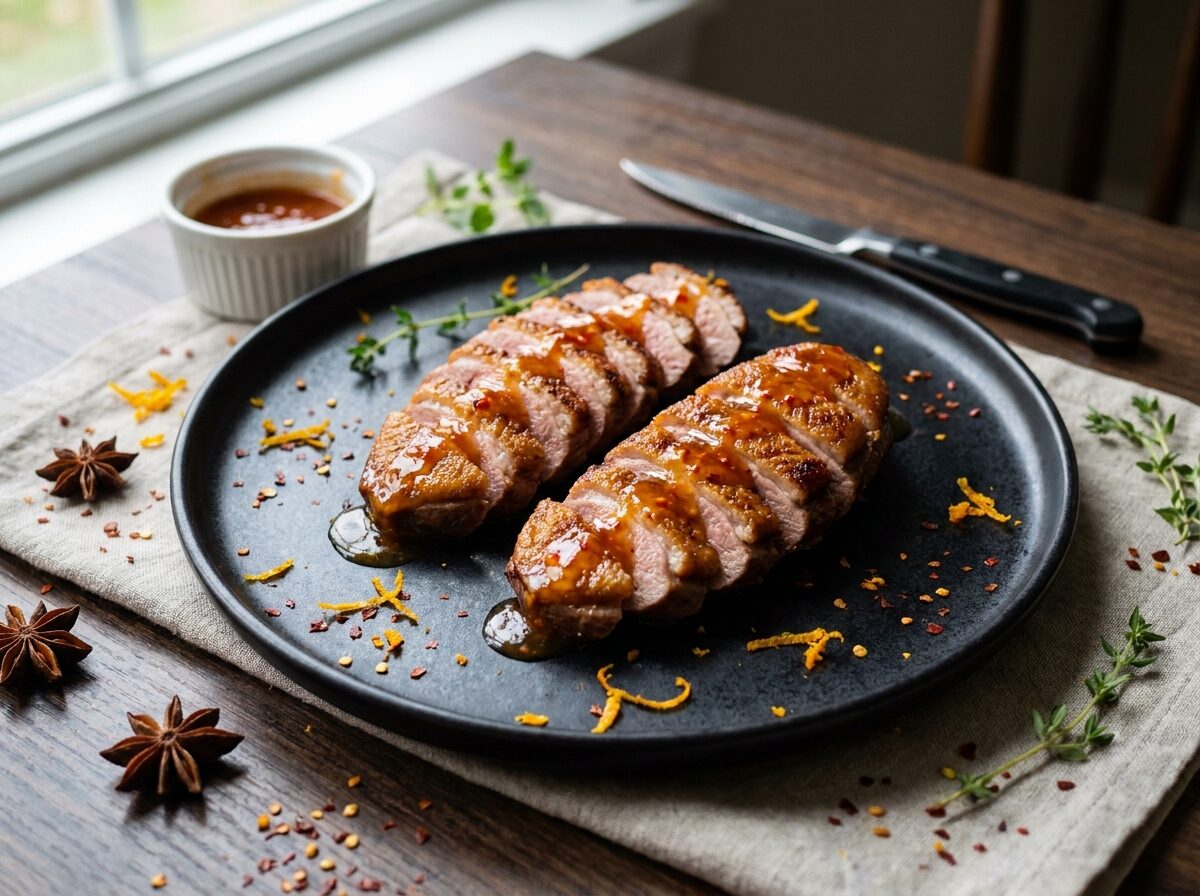
Duck Breast with Orange Chili Glaze
⏲ ~42 min total · prep 23 · cook 19 · 4 servings
Recipe Lab · 2026-09-29 · Developed with AI assistance, human-reviewed · Photos: original, AI-generated with real-dish reference
Adapted from Wikibooks Cookbook, Asian Grilled Duck Breasts (CC BY-SA 4.0 (verified via footer link on the source page)).
Ingredients
- 2 boneless duck breasts (6 to 8 oz each), skin on
- 1/2 tsp each salt and freshly ground black pepper
- 1/2 tsp ground ginger
- 1/4 tsp red pepper flakes
- 1 tsp curry powder
- 1/4 tsp ground cinnamon
- 1/2 tsp garlic powder
- 1 tbsp orange zest (from 1 orange)
- 1/4 cup fresh orange juice
- 2 tbsp allulose
- 2 tsp soy sauce or tamari
- 2 tsp sambal oelek
Nutrition
Calculated from USDA FoodData Central reference values, per serving (serves 4.0).
| Per serving | |
|---|
| calories kcal | 168 |
| protein g | 19.0 |
| fat g | 8.3 |
| carbs g | 3.6 |
| fiber g | 1.1 |
| net carbs g | 2.5 |
Instructions
- Score the duck skin in a crosshatch pattern with cuts 1/4 inch apart, slicing through the fat but stopping at the meat. The cuts give the fat somewhere to go so the skin crisps instead of turning rubbery.
- Stir the salt, pepper, ginger, red pepper flakes, curry powder, cinnamon, and garlic powder together in a small bowl. Coat both sides of each breast with the spice rub and let them sit on the counter for 30 minutes.
- Combine the orange zest, orange juice, allulose, soy sauce, and sambal oelek in a small saucepan. Simmer over medium heat for 4 to 5 minutes, until it coats the back of a spoon, then set it aside off the heat. It keeps thickening as it cools.
- Set the breasts skin side down in a cold 10-inch cast iron skillet, then turn the heat to medium low. Render the fat for 10 to 12 minutes, pouring off the pooled fat once or twice, until the skin is deep brown and lifts easily from the pan.
- Flip the breasts and cook 3 to 4 minutes more. Start checking the thickest point with an instant read thermometer at minute 3 and pull them at 130 to 135 F for medium rare, or 145 F for medium.
- Move the duck to a cutting board and rest it 5 minutes before slicing. The internal temperature climbs a few degrees during the rest.
- Slice the breasts across the grain and serve with the warm glaze spooned over the top, or pour it into a small bowl for dipping.
Why this recipe works
- Skin Scoring: Scoring the duck skin creates pathways for rendered fat to escape. This prevents the meat from curling and ensures a crisp texture.
- Cold Pan Rendering: Rendering the fat in a cold pan promotes even distribution of heat. This technique yields a crispy skin without burning the meat underneath.
- Allulose Caramelization: Allulose provides the necessary caramelization for the glaze without the carbohydrates. This sweetener mimics the texture of sugar while keeping the dish keto compliant.
Tips
- Pat the meat dry. Pat the duck breasts dry with paper towels before seasoning. Moisture prevents the skin from crisping during the rendering process.
- Do not move the pan. Do not disturb the duck while the fat renders. Moving the meat too early disrupts the rendering process and can lead to uneven cooking.
- Use a thermometer. Use an instant-read thermometer to check the internal temperature. Duck is best served medium-rare to medium to retain moisture.
- Whisk the glaze. Whisk the glaze ingredients thoroughly before heating. This ensures the spices and sweetener are evenly distributed.
- Let the duck rest. Let the duck rest on a wire rack after cooking. This allows the juices to redistribute throughout the meat.
Serving
Serve this duck alongside roasted asparagus or green beans to balance the richness of the meat. The orange chili glaze pairs exceptionally well with bitter greens like arugula or spinach. For a low-carb side, consider cauliflower rice or a simple green salad dressed with olive oil. The savory notes of the curry powder in the glaze complement roasted root vegetables such as carrots or parsnips. A light reduction of the leftover sauce makes an excellent finishing drizzle over the sliced meat.
Storage
Store leftover duck in an airtight container in the refrigerator for up to three days. Keep the glaze in a separate jar to prevent it from becoming soggy. To reheat the duck, place it in a cold skillet and warm it over low heat until the internal temperature reaches 130 degrees Fahrenheit. Alternatively, you can reheat it in an oven set to 325 degrees Fahrenheit wrapped in foil. Do not microwave the duck as it will likely dry out the meat. The glaze can be reheated on the stovetop or in the microwave.
Variations
- Chicken Thighs: Use chicken thighs instead of duck breasts for a more affordable option. The dark meat absorbs the glaze well and remains juicy during cooking.
- Erythritol Sweetener: Swap the allulose for erythritol or monk fruit sweetener. These keto-friendly alternatives provide the same sweetness without the liquid content of allulose.
- Apple Cider Vinegar: Replace the orange juice with apple cider vinegar for a different flavor profile. This creates a tart and savory glaze that pairs well with pork chops.
- Fruit Addition: Add sliced pears or apples to the pan during the last two minutes of cooking. The fruit caramelizes in the rendered duck fat and adds texture to the dish.
FAQ
- What is the ideal internal temperature for duck? The duck is done when it reaches 130 to 135 degrees Fahrenheit. This temperature ensures the meat is juicy without being dry.
- Why is scoring the skin important? Scoring the skin allows the fat to render out evenly. This prevents the meat from curling and results in a crispy texture.
- Can I freeze the cooked duck? You can freeze the cooked duck for up to two months. Thaw it in the refrigerator overnight before reheating.
- What if I do not have a cast iron skillet? A heavy stainless steel or carbon steel pan works equally well. The key is to use a pan that distributes heat evenly.
- How do I store the glaze separately? Keep the glaze in a sealed container in the refrigerator. This prevents the sauce from soaking into the meat and becoming soggy.
Related keto recipes
→ Keto Dinner Ideas
Nutrition is calculated per serving from USDA FoodData Central reference values (embedded table); trace ingredients with negligible macros are excluded. Figures are estimates for informational purposes. As an Amazon Associate and affiliate partner, Keto Food Ideas earns from qualifying purchases at no additional cost to you.
← Home