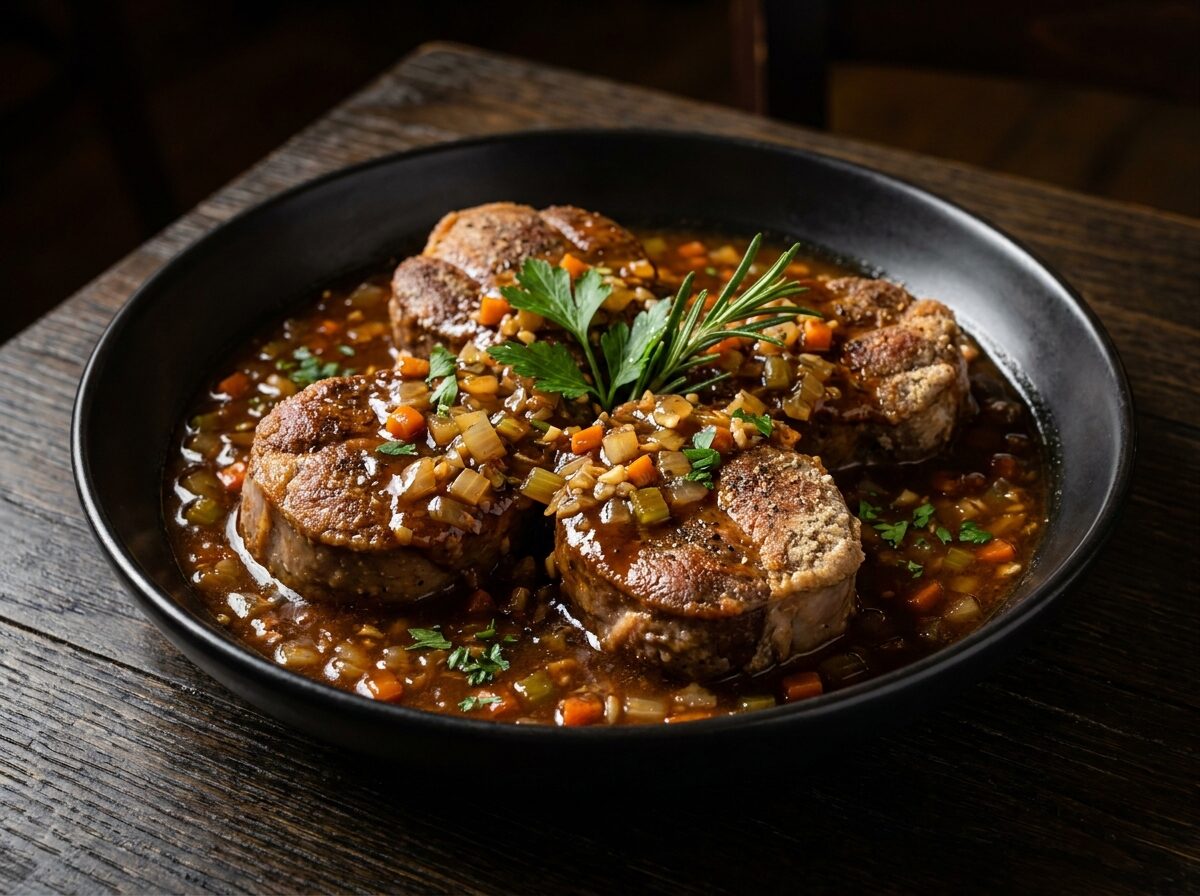
Keto Osso Buco
⏲ ~23 min total · prep 16 · cook 7 · 4 servings
Dinner⏱ 215 min total🔥 6.0g net carbs
By the KFI Test Kitchen · Tested & approved by Jason Lieu, KFI recipe editor
Published Sep 15, 2026 · Updated Sep 15, 2026
Ingredients
- 4 veal shanks, about 1 1/2 inches thick (1 lb each)
- 1/3 cup almond flour
- 1/2 tsp salt + 1/4 tsp black pepper, for dredging
- 3 tbsp olive oil, divided
- 1 yellow onion, finely diced
- 1 carrot, finely diced
- 1 celery stalk, finely diced
- 3 garlic cloves, minced
- 1/2 cup dry white wine
- 1 1/2 cups beef broth + 1/2 cup crushed tomatoes
- 1 bay leaf + 1 tsp dried thyme
- 1 lemon's zest + 2 tbsp chopped parsley + 1 small garlic clove, minced together (gremolata)
Instructions
- Tie each shank around its girth with butcher twine so the marrow stays in, then dredge in the almond flour mixed with the salt and pepper, shaking off the excess.
- Heat 2 tablespoons of the oil in a 5-quart Dutch oven over medium-high and sear the shanks until deeply browned — about 3 minutes per face, including the tall rim, held with tongs — roughly 10 minutes total. Set aside.
- Lower the heat to medium, add the last tablespoon of oil, and cook the onion, carrot, and celery 6-8 minutes until soft and golden, scraping up the browned fond; stir in the garlic for the last minute.
- Pour in the wine and simmer 2 minutes, scraping the bottom, until the sharp alcohol smell turns sweet.
- Add the broth, crushed tomatoes, bay leaf, and thyme, then nestle the shanks bone-side up with liquid coming about halfway up their sides.
- Braise covered at 325°F for 2 to 2 1/2 hours, turning the shanks once at the hour mark, until the meat twists free under a fork with no tug.
- Discard the twine and bay leaf, skim the fat, and simmer the sauce 5 minutes more if it looks thin.
- Scatter the lemon-parsley-garlic gremolata over each shank right before serving — the raw garlic and citrus lift the whole pot.
Why this recipe works
- Almond flour dredge It browns in the hot oil and thickens the braising liquid by a degree, all without wheat. Shake off the excess or the pot bottom turns to paste.
- Twine and a tall sear Tying each shank holds the meat snug to the bone so the marrow stays put. Searing every face, including the tall rim, builds the fond the whole sauce leans on.
- Gremolata at the end Raw garlic, lemon zest, and parsley go on at the table, never in the pot. After three hours of slow braise, that fresh, sharp finish keeps the plate from tasting heavy.
Tips for making this recipe well
Sear in a hot Dutch oven
Two tablespoons of oil, medium-high, about three minutes per face and roughly ten minutes total. If nothing sizzles on contact, wait; the pot isn't ready.
Liquid halfway, never higher
Nestle the shanks bone-side up with broth coming halfway up their sides. Submerged shanks boil instead of braise, and the top half dries out.
Turn once, at the hour mark
A single turn keeps both halves of each shank in the liquid. Lift with tongs, turn gently, and leave it alone again.
The fork decides
At two to two and a half hours, twist a fork in the thickest meat. It should give with no tug at all; any resistance means another twenty minutes.
Skim and reduce before serving
Fish out the twine and bay leaf, skim the fat, and simmer the sauce five minutes more if it looks thin. The almond flour only does so much.
Serving suggestions
Set each shank on a warm plate and spoon the reduced sauce over the meat, marrow facing up for anyone who fights for it. The gremolata goes on right at the table so the lemon zest stays sharp. At 6.0g net carbs a serving, this is a Sunday dinner that fits the week too. A bitter green salad on the side cuts the richness. Eat the marrow with a small spoon. Consider it the cook's tax.
Storage and meal prep
Osso buco is better on day two, so make it ahead when you can. It keeps 3 to 4 days refrigerated, and the fat lifts off in one solid piece once chilled. Reheat covered in a 325°F oven or over low heat on the stove until warmed through. It freezes for 2 to 3 months; thaw overnight in the fridge and add fresh gremolata only after reheating, never before storage.
Variations worth trying
- Beef shanks instead Same method, same braise, with an extra half hour in the oven. The flavor is deeper and the price is kinder.
- No wine in the house Deglaze with extra broth and finish the sauce with a squeeze of lemon. You lose a little sweetness and keep the braise.
- Extra gremolata Double the lemon, parsley, and garlic. Nobody has ever complained.
Frequently asked questions
Do I have to tie the shanks?
No, but the twine keeps the meat snug to the bone so the marrow doesn't escape into the pot. Untied shanks braise fine; they look looser on the plate.
Can I skip the almond flour dredge?
Yes, sear the bare shanks and expect a thinner sauce. Simmer it uncovered a few extra minutes at the end to make up the body.
How do I know when it's done?
The meat should twist free under a fork with no tug at all. If it fights you, cover the pot and give it another twenty minutes.
Why is my sauce thin?
It likely needs reduction, not more thickener. Skim the fat, then simmer the sauce uncovered for five minutes or more until it coats a spoon.
What's the point of gremolata?
Three hours of braise is rich, and the raw garlic, lemon zest, and parsley cut straight through it. Added at the last second, it lifts the whole pot.
Related keto recipes
As an Amazon Associate and affiliate partner, Keto Food Ideas earns from qualifying purchases at no additional cost to you. Nutritional values are estimates. Recipes are developed with AI assistance and reviewed by our editors before publishing.
← More Dinner recipes · Home


:max_bytes(150000):strip_icc()/279971-low-carb-meatloaf-with-pork-rinds-DDMFS-107-4x3-f60484e80d2a47b7851bc41e824c6f53.jpg)