Dinner
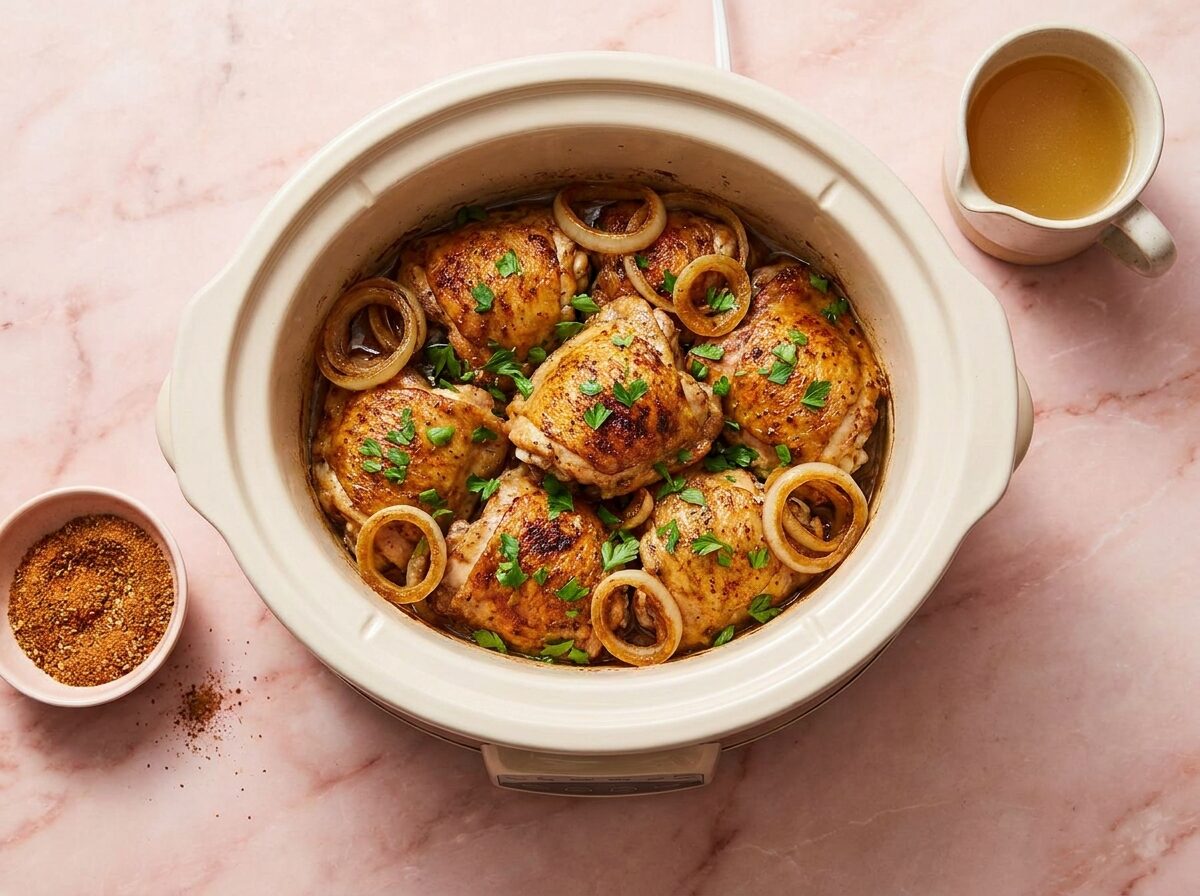
Keto Smoky Crockpot Chicken Thighs
Dinner
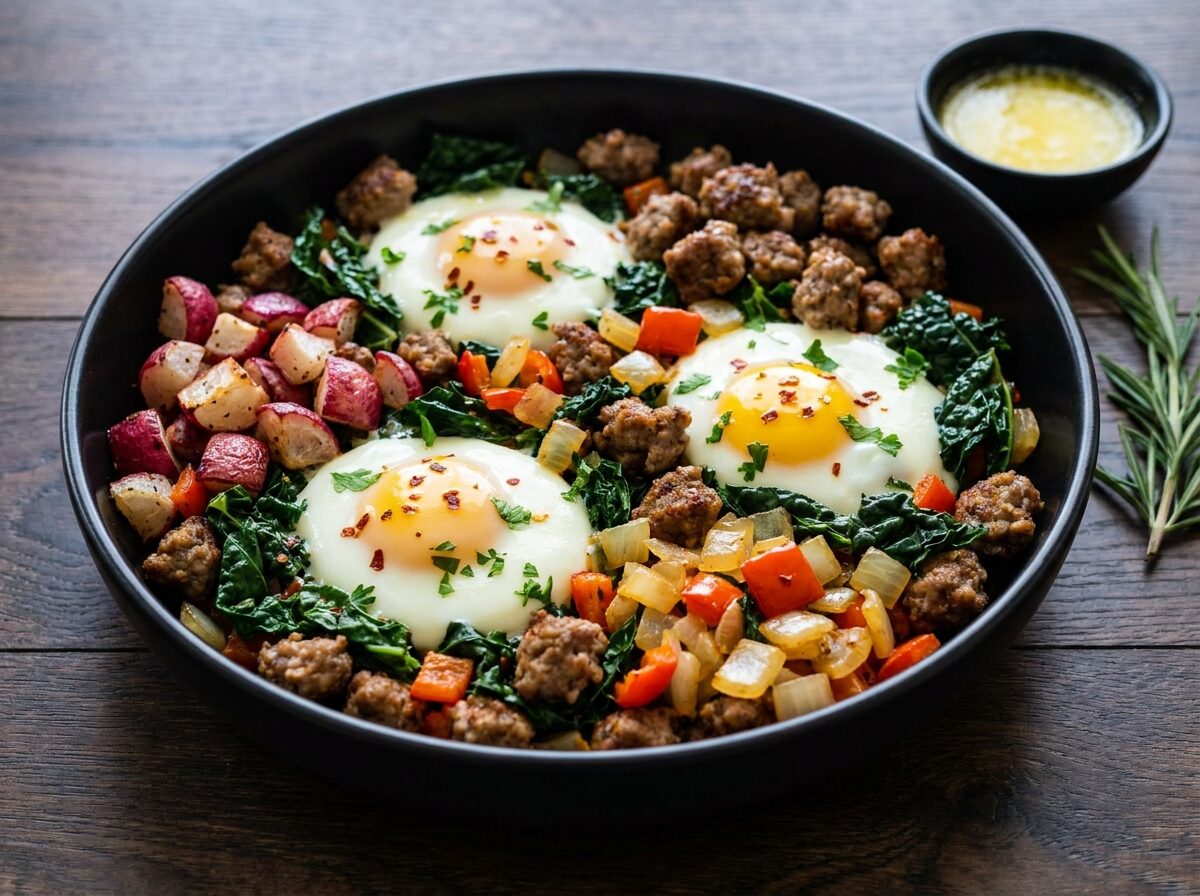
Keto Christmas Breakfast Hash
Dinner
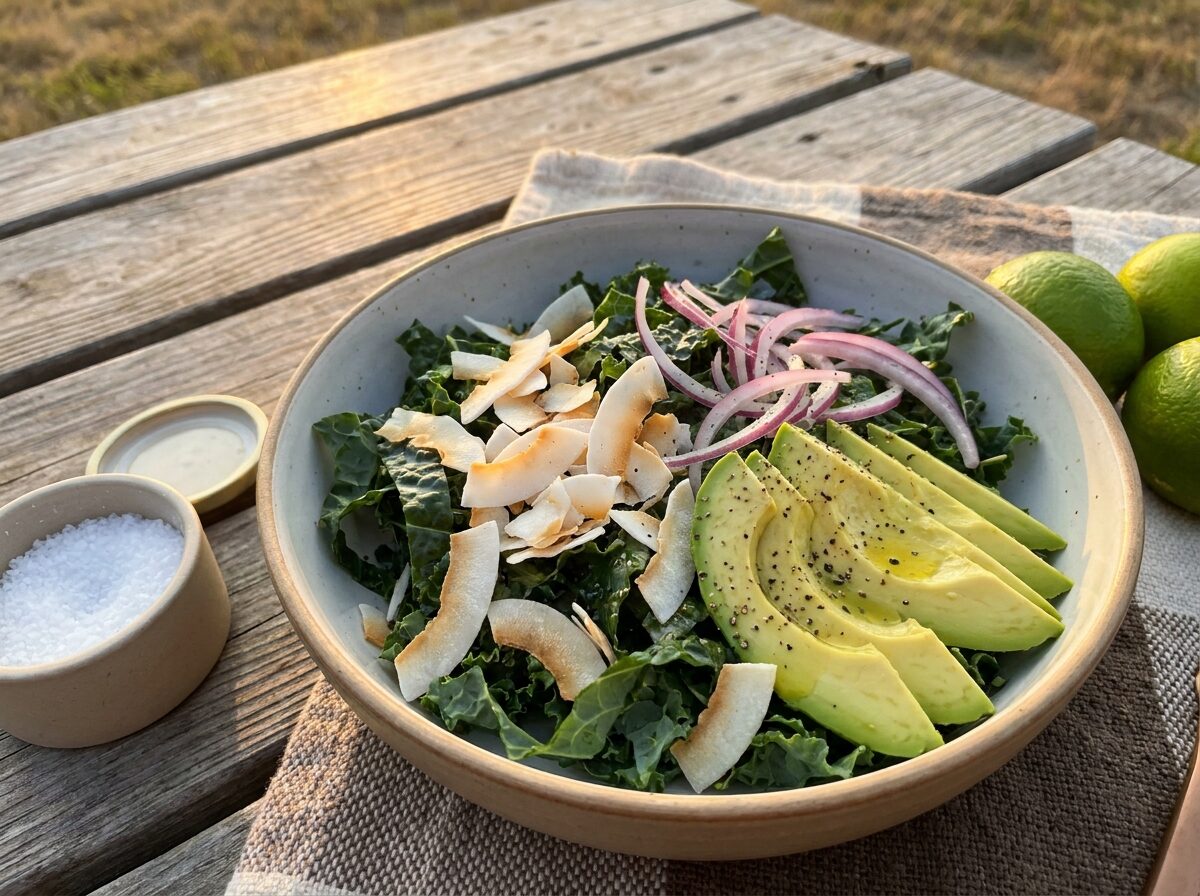
Keto Kale and Coconut Salad
Dinner
⏲ ~20 min total · prep 10 · cook 10 · 4 servings
Published Sep 15, 2026 · Updated Sep 15, 2026
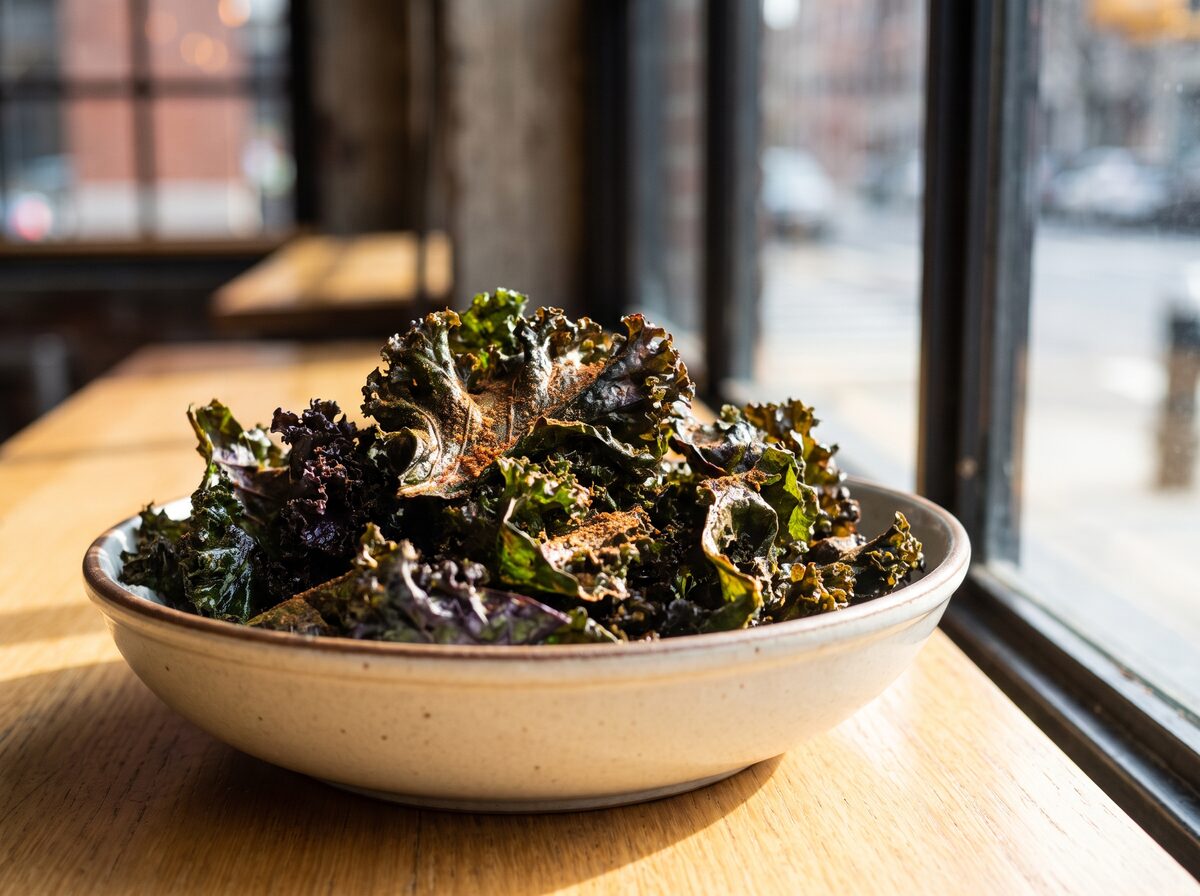
Crowding is the number one cause of soggy chips. Spread the leaves across two rimmed baking sheets with space between pieces, since overlapping leaves trap steam and stay limp.
Fit each sheet with kale only in the middle two-thirds as written. Sheet edges run hotter in most ovens, and a paprika-dusted leaf that runs hot goes from green to brown fast.
At the 10-minute mark, swap the pans top to bottom and front to back, then bake 8 to 10 minutes more. Ovens have hot spots, and the rotation gets every leaf to the same brittle stage.
The chips crisp further as they cool, so give them the full 10 minutes on the sheets. Leave the storage container lid off until they are completely cool, because sealed-in warmth softens the batch.
Rub the oil mixture in for the full 1 to 2 minutes until every leaf is glossy. Hands distribute the paprika and cayenne better than spoons, which tend to leave dry patches and spice pools.
At 1.9 net carbs, this is a snack you can eat by the bowlful without doing math. Pile the chips in a wide, shallow bowl within a few hours of baking, while they still shatter. They are good crushed over scrambled eggs and even better next to mashed avocado for scooping. The cayenne shows up as a slow warmth at the back of your throat, so heat-shy eaters usually still go for seconds. Thirty minutes of oven time makes this an easy weeknight project.
These are a same-week snack, not a make-ahead staple. Once the chips have cooled completely, seal them in an airtight container at room temperature and aim to finish them within 3 to 4 days. Humidity is the enemy, so keep the container away from the stove and the dishwasher. A batch that has gone soft is not a lost cause: spread the leaves back on a baking sheet and warm them at 300°F for 3 to 4 minutes, then cool again. The fridge adds moisture rather than protection, so skip it.
Bitterness usually traces back to the thick center ribs, which the instructions have you discard. Overbrowned leaves also read bitter, so pull the pans at the first sign of color past dark green.
Yes at this temperature. A 300°F oven sits well below olive oil's smoke point, so the swap changes nothing about the method. Keep the same 1 1/2 tablespoon amount.
There is no sugar in the coating to caramelize, so brown means the leaves ran too hot or too long. Check your oven with a thermometer and rotate the pans at the 10-minute mark.
Pat the washed leaves thoroughly dry with clean towels, pressing the water out of the curls. Any moisture left behind steams the leaves instead of crisping them, so this step is worth doing twice.
This method is written for a 300°F oven, and the timing cues matter more than the equipment. If you try an air fryer, work in small single-layer batches and start checking a few minutes early, because the concentrated airflow browns edges faster.
As an Amazon Associate and affiliate partner, Keto Food Ideas earns from qualifying purchases at no additional cost to you. Nutritional values are estimates. Recipes are developed with AI assistance and reviewed by our editors before publishing.