Dinner
Low Carb Steak and Green Bean Stir Fry
Dinner
Low Carb Vietnamese Shrimp And Zucchini
Dinner
Lemon Chicken And Asparagus Stir-Fry | Low-Carb Dinner

Dinner
⏲ ~20 min total · prep 15 · cook 5 · 4 servings
Published Sep 15, 2026 · Updated Sep 15, 2026
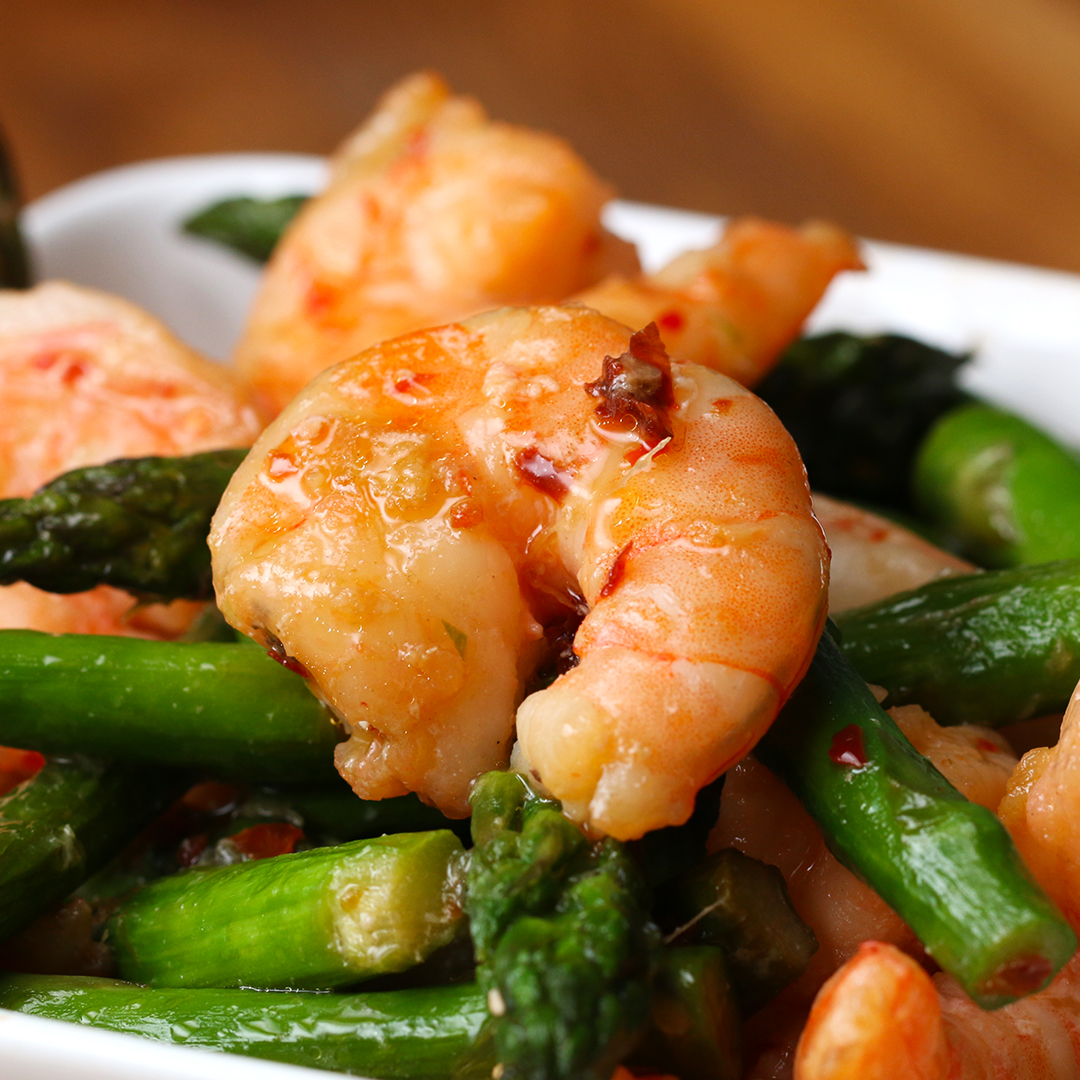
Shrimp announce doneness by shape. Loose C-shapes mean cooked; tight O's mean overcooked and heading toward rubber. Toss constantly through the final two minutes and pull them early.
Thirty seconds in a cleared space in the center is enough for the garlic and ginger. Browned garlic tastes acrid, and the flavor carries through the whole pan.
Diagonal cuts expose more surface area, so the pieces blister faster and cook more evenly. It also looks like you tried harder than you did.
Toasted sesame oil loses its character when heated hard. Added off the heat, it smells and tastes the way it should.
The whole recipe runs twenty minutes and the cooking part takes under ten. Mince, grate, and slice everything before the pan gets warm; there's no time mid-stir-fry.
A pound and a half of shrimp makes this feel abundant for what is honestly a twenty-minute meal. Serve over cauliflower rice or shirataki noodles, both of which carry the gingery glaze well. Straight off the platter works too, since scallions and sesame seeds are the only garnish needed. Four grams of net carbs keeps the rest of the plate open for a cucumber salad with rice vinegar. Cold leftovers over greens make a quietly good lunch.
Cooked shrimp keep 3 to 4 days refrigerated in a covered container, though they're at their best early in that window. Reheat briefly in a hot skillet; shrimp turn rubbery fast in a microwave. The asparagus will be soft by day three no matter what. Freezing is possible for 2 to 3 months but changes the texture, so freeze only if you must and thaw overnight in the fridge. Keep the scallions and sesame seeds separate if you can and add them fresh when reheating.
They cooked past done. Shrimp need a minute undisturbed and then one to two minutes of tossing; opaque flesh curled into loose C-shapes is the finish line, and carryover heat keeps cooking them after that.
Yes. Thaw them completely, then pat them very dry before the pan gets involved. Wet shrimp steam instead of searing, and the seasoning slides right off.
Soy sauce or tamari works in the same three-tablespoon amount. The flavor runs saltier, so taste before adding the full half teaspoon of salt.
Not happily. Asparagus needs three to four minutes and shrimp need three total, so staging them is what keeps one from turning rubbery while the other stays raw.
Half a teaspoon of red pepper flakes gives a noticeable warmth without overwhelming the ginger. Cut to a quarter teaspoon for heat-shy eaters, or leave them out; the dish holds up.
As an Amazon Associate and affiliate partner, Keto Food Ideas earns from qualifying purchases at no additional cost to you. Nutritional values are estimates. Recipes are developed with AI assistance and reviewed by our editors before publishing.