Keto Tuna Sushi Pilaf
⏲ ~31 min total · prep 19 · cook 12 · 4 servings
Dinner⏱ 260 min total🔥 1.9g net carbs⚡ ≈547 kcal/serving~29% of calories from carbs
By the KFI Test Kitchen · Tested & approved by Jason Lieu, KFI recipe editor
Published Sep 15, 2026 · Updated Sep 15, 2026
Ingredients
- 1 large head cauliflower (about 5 cups riced), leaves and core removed
- 3 tbsp rice vinegar
- 2 tsp powdered erythritol
- 3/4 tsp fine sea salt, divided
- 2 (5 oz) cans tuna in water, drained and flaked
- 3 tbsp mayonnaise
- 1 tsp sriracha
- 1 Persian cucumber, cut into thin matchsticks
- 1/2 ripe avocado, sliced
- 2 sheets toasted nori, snipped into 1-inch strips with scissors
- 1 tsp toasted sesame seeds, plus 2 tsp tamari for drizzling
Instructions
- Pulse the cauliflower florets in a food processor in two batches, 8 to 10 pulses each, until it looks like couscous — stop before it turns to mush.
- Microwave the riced cauliflower, covered, 4 minutes until steaming and bendable, then spread it on a rimmed baking sheet and press firmly with paper towels until the towels come up barely damp.
- Drizzle the warm cauliflower with the rice vinegar, erythritol, and 1/2 teaspoon of the salt, cutting it in with sideways slicing strokes like sushi rice, never stirring or mashing it.
- Spread the seasoned rice 1/2 inch thick on the baking sheet, cool 15 minutes, then refrigerate uncovered 4 hours — the long chill dries the surface and sets the grains so it eats like short-grain rice instead of vegetable mash.
- Stir the tuna with the mayonnaise, sriracha, and remaining 1/4 teaspoon salt until it holds together in thick flakes.
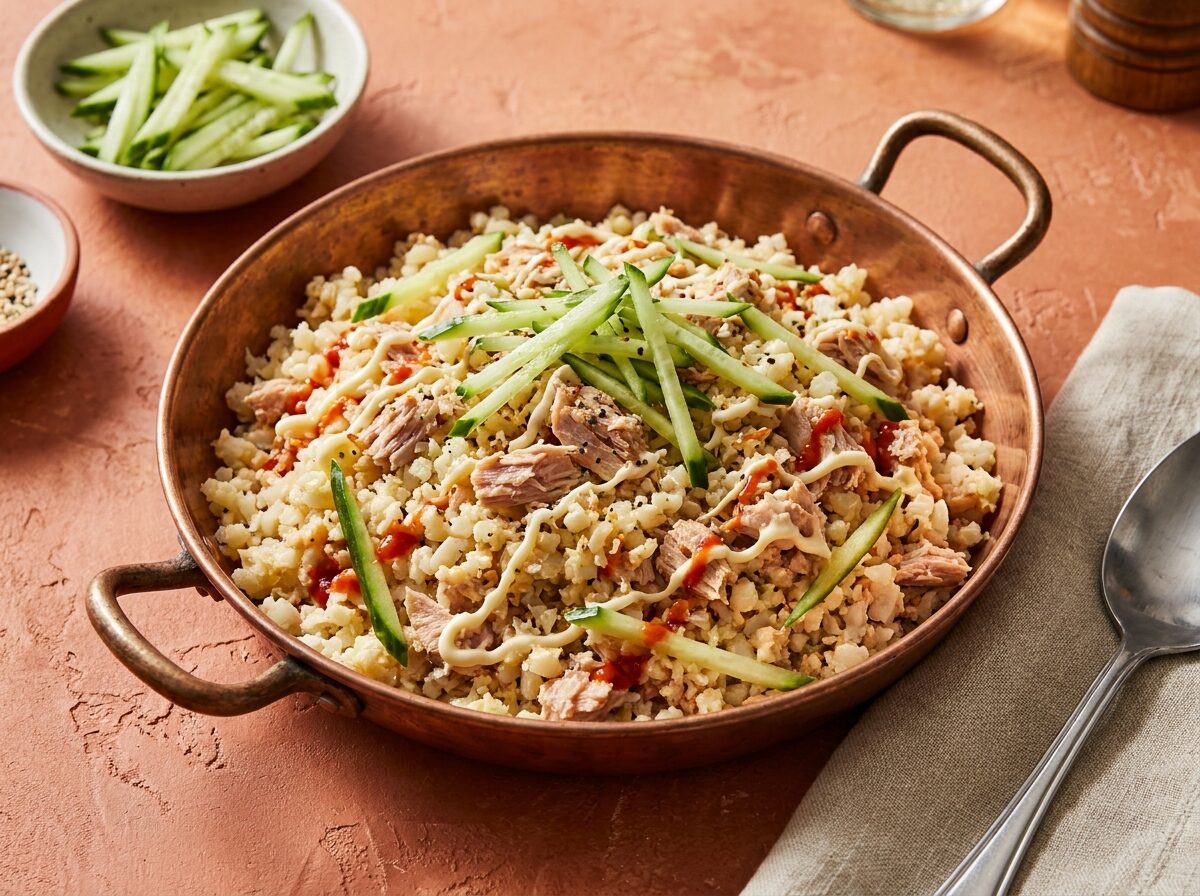
- Mound the chilled cauliflower pilaf in 4 shallow bowls, scatter the sesame seeds over it, and top each with a scoop of tuna, cucumber matchsticks, avocado slices, and nori strips.
- Drizzle each bowl with 1/2 teaspoon tamari and serve cold.
Why this recipe works
- The long chill Four hours uncovered in the refrigerator dries the surface of the riced cauliflower and sets the grains. It is the step that separates a sushi-style pilaf from vegetable mash.
- Sushi seasoning Rice vinegar, powdered erythritol, and salt cut into the warm cauliflower with sideways slicing strokes, the way sushi rice is seasoned. A full bowl lands at 1.9 net carbs.
- Pressed dry Paper towels pressed firmly into the warm rice pull the water out until they come up barely damp. Dry grains separate; wet grains glue.
Tips for making this recipe well
Pulse in batches
Two rounds of 8 to 10 pulses give couscous-sized grains. An overprocessed batch goes pasty and never recovers, no matter how long it chills.
Season it warm
The vinegar mixture soaks in while the cauliflower is hot from the microwave. Cut it in with sideways strokes; stirring and mashing knock the grains apart.
Dry harder than feels right
Press paper towels into the rice until they come up barely damp. Surface water is the single thing that ruins the texture.
Snip the nori
Kitchen scissors make clean 1-inch strips that scatter evenly over the bowls. Torn nori clumps and goes leathery where it folds over on itself.
Serve it cold
This bowl is meant to be eaten at refrigerator temperature. The pilaf holds its grains and the tuna salad stays firm instead of slipping.
Serving suggestions
This is the bowl we make when sushi is the mood and rice is not invited. Mound the chilled pilaf in shallow bowls, scatter the toasted sesame seeds, and top each with a scoop of the sriracha tuna, cucumber matchsticks, avocado slices, and snipped nori. Half a teaspoon of tamari over each bowl, and no more, because the tuna is already seasoned. Chopsticks or a fork, it eats the same. At 1.9 net carbs it covers lunch with room to spare.
Storage and meal prep
Build the bowls at the last minute and store the parts separately. The seasoned pilaf keeps three to four days covered in the fridge and improves on day two as it dries further. The tuna salad lasts the same three to four days in a sealed container. Slice the avocado when you eat, since it browns within hours, and keep the nori strips in a bag at room temperature so they stay crisp until serving.
Variations worth trying
- Salmon instead Two cans of salmon in place of the tuna, with the same mayonnaise and sriracha. Check the label for bones if that bothers you.
- Turn up the heat Double the sriracha for a tuna salad with a real edge, or leave it out for a plain version. The bowl works at any point on that line.
- No nori Skip the nori and add another half teaspoon of sesame seeds. You lose the sea flavor and keep the texture.
- Add egg A thin omelet, rolled and sliced into ribbons, on top of each bowl moves it closer to a sushi case. Season the egg with a pinch of salt as it cooks.
Frequently asked questions
Why four hours in the fridge?
The long uncovered chill dries the surface and firms the grains, so the pilaf holds its shape in the bowl instead of slumping. Cut it short and it eats like soft cauliflower. That chill is the whole trick behind the rice imitation.
Can I skip the erythritol?
It rounds the vinegar the way sugar rounds sushi rice, and without it the seasoning reads sharp. Any granulated keto sweetener you keep on hand works in the same two teaspoons. Do not use liquid sweetener here; it thins the seasoning.
Do I need a food processor?
It is the practical way to rice a whole head in two quick batches. A box grater works, at the cost of uneven grains and sore knuckles. Pre-riced cauliflower from the store is a fair shortcut; dry it the same way.
Can I pack it for lunch?
Yes, and it is built for it. Pack the pilaf and tuna together, keep the cucumber on top, and add the avocado and nori when you eat. With an ice pack it survives a morning in a bag without complaint.
Why tamari?
Tamari is brewed without wheat in most cases and tastes deeper and less sharp than standard soy sauce. Either works in the same half-teaspoon drizzle. Measure it out either way, because a heavy hand floods the bowl.
Related keto recipes
As an Amazon Associate and affiliate partner, Keto Food Ideas earns from qualifying purchases at no additional cost to you. Nutritional values are estimates. Recipes are developed with AI assistance and reviewed by our editors before publishing.
← More Dinner recipes · Home