Garlic Butter Steak Recipe | 2g Net Carbs
⏲ ~34 min total · prep 4 · cook 30 · 4 servings
Dinner⏱ 58 min total🔥 2.0g net carbs
By the KFI Test Kitchen · Tested & approved by Jason Lieu, KFI recipe editor
Published Sep 15, 2026 · Updated Sep 15, 2026
Ingredients
- 1 (1 1/4 lb) boneless ribeye steak, about 1 1/2 inches thick
- 1 1/2 tsp kosher salt
- 1/2 tsp coarsely ground black pepper
- 1 tbsp neutral high-heat oil
- 3 tbsp unsalted butter
- 4 cloves garlic, smashed with the side of a knife
- 3 sprigs fresh thyme
- Flaky salt, for finishing
Instructions
- Salt the ribeye steak on every surface with the kosher salt, set it on a wire rack over a sheet pan, and let it sit on the counter 20 minutes while the oven preheats to 275°F.
- Blot the surface dry with paper towels (a dry surface is what builds the crust) and season with the black pepper.
- Roast on the rack 25-35 minutes until an instant-read thermometer reads 118-120°F in the thickest part for medium-rare.
- Meanwhile, heat a cast-iron skillet over high heat with the oil until it just begins to smoke. Sear the steak 90 seconds to 2 minutes per side, pressing gently, until deeply browned, about 1 minute on the fat cap edge as well.
- Lower the heat to medium, add the butter, garlic, and thyme, then tilt the pan and baste the steak continuously with the foaming butter for 45-60 seconds, until the butter smells nutty and the garlic is pale gold, never dark.
- Rest the steak on a cutting board 10 minutes — carryover heat brings it to about 130°F and the juices redistribute.
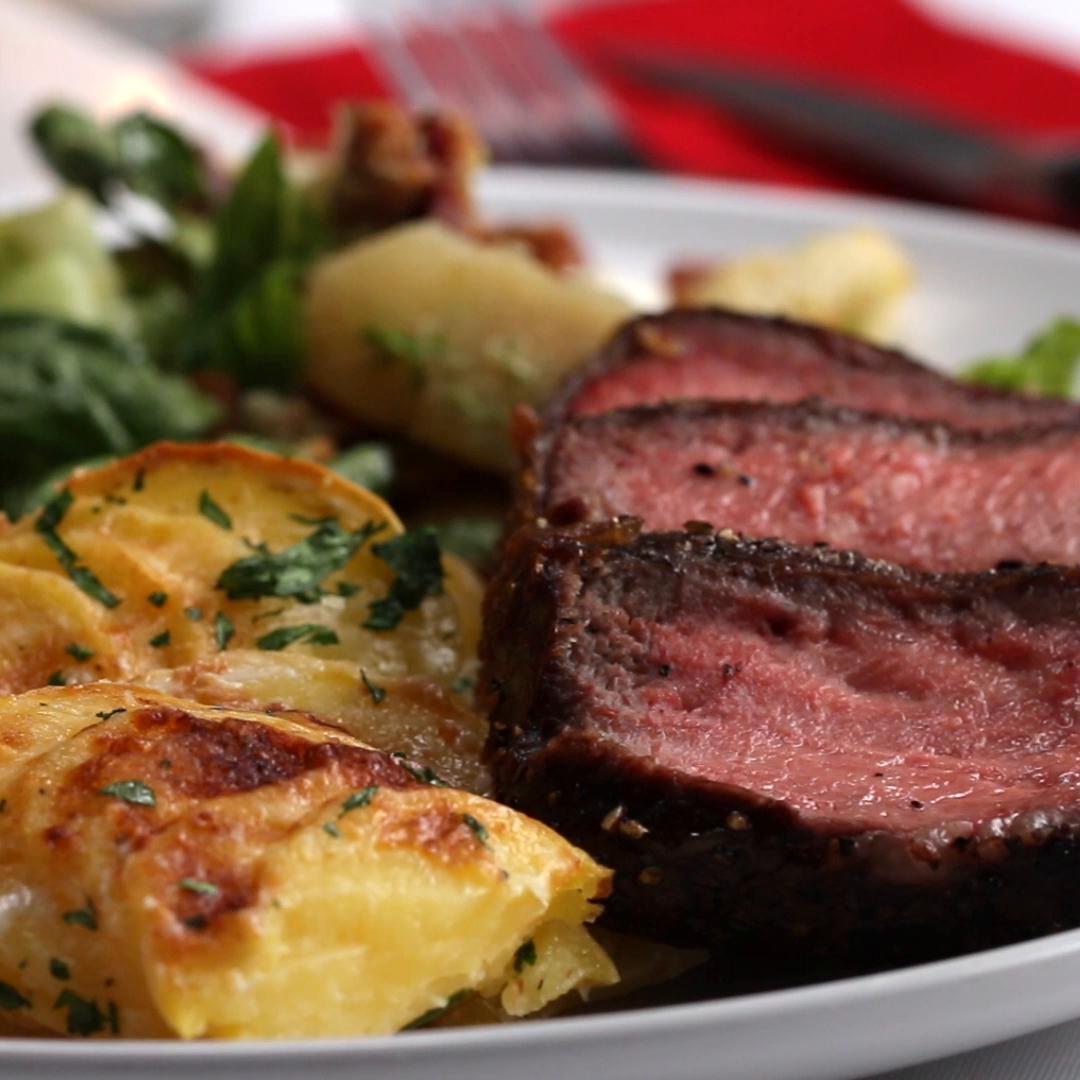
- Slice against the grain into 1/2-inch pieces, pour the garlic butter from the pan over the slices, and finish with flaky salt.
Why this recipe works
- Reverse sear A slow 275°F roast brings the whole steak to an even 118 to 120°F before the pan ever sees it. The cast-iron finish then builds crust in about two minutes instead of overcooking the middle trying to get there.
- Butter baste with thyme and garlic Basting with butter that has gone nutty, with smashed garlic and thyme in it, seasons the crust in the last minute. It's the pan technique steakhouses charge for.
- The rest matters Ten minutes on the board lets carryover heat settle the center around 130°F and keeps the juices in the meat. Cut too early and the board drinks them instead.
Tips for making this recipe well
Salt early, dry late
Salting twenty minutes ahead seasons past the surface, and blotting dry right before the pan is what makes the crust possible. Wet steak steams; dry steak browns.
Fat cap down first
Sear the fat cap edge for about a minute so it renders and crisps like the rest. Tongs, not a spatula, for this job.
Butter goes in later
Butter added to a screaming-hot pan burns before the steak benefits. Drop the heat to medium first, then add it with the garlic and thyme and baste through the foam.
Garlic watches the clock
Smashed cloves should turn pale gold, never dark, during the 45 to 60 seconds of basting. Dark garlic turns bitter and tints the butter with it.
Slice against the grain
Look at the direction the muscle fibers run and cut across them into half-inch slices. Cutting with the grain leaves fibers long, and long fibers mean chewing.
Serving suggestions
Fifty-eight minutes sounds like a project, but the oven does the long stretch while you pour drinks. Fan the sliced ribeye on a warm platter with the garlic butter poured over. Two people eat well off a pound and a quarter; three if the sides are serious. Roasted broccoli or mashed cauliflower fit the plate. Flaky salt at the table does more than any extra seasoning in the pan.
Storage and meal prep
Leftover steak keeps 3 to 4 days in the fridge, wrapped or in a container. Slice it before storing so reheating is quick and even. Warm the slices gently in a skillet with a spoonful of butter over low heat, or eat them cold straight onto a salad; ribeye might be better that way. Freeze for 2 to 3 months if needed, well wrapped, and thaw overnight in the refrigerator. Reheated steak never matches the first night, so plan portions with that in mind.
Variations worth trying
- Different cut The same reverse-sear works for a New York strip or a thick filet. Pull leaner cuts a touch cooler than the ribeye so carryover heat doesn't push them past medium-rare.
- Herb changes Rosemary or a bay leaf can stand in for thyme in the basting butter. Add rosemary early; it needs the full minute to release.
- Extra garlic butter Double the butter, garlic, and thyme step and keep the extra in the fridge. It solidifies into a spreadable disc that melts onto eggs the next morning.
- No cast iron Any heavy skillet works if you don't own cast iron. A thin pan drops temperature when the steak lands and the crust suffers for it.
Frequently asked questions
Can I skip the oven and pan-sear only?
You can, but the edge-to-edge pink of the reverse sear is the point of the method. Searing alone gives you a gray band under the crust.
What if I like my steak more done?
Roast until the center reads five to ten degrees above the 118 to 120°F range, then sear as written. The butter baste still adds plenty at higher doneness.
Why rest the steak for ten minutes?
Resting lets the juices redistribute instead of running onto the board, and carryover heat brings the center up to about 130°F. Ten minutes costs nothing and saves the whole dinner.
Can I use salted butter?
Yes, and then skip or halve the flaky salt finish. The steak is already salted from the start, so unsalted butter keeps the seasoning under your control.
What temperature is medium-rare?
This recipe pulls the roast at 118 to 120°F, and carryover heat lands it around 130°F after resting, which is classic medium-rare. The thermometer beats any timing chart.
Related keto recipes
As an Amazon Associate and affiliate partner, Keto Food Ideas earns from qualifying purchases at no additional cost to you. Nutritional values are estimates. Recipes are developed with AI assistance and reviewed by our editors before publishing.
← More Dinner recipes · Home